Unifying Telco & Credit bills

Simplifying Payments

Design & Experience Strategy Lead (2024)

Simplifying payments

Context

By 2024, payments had become one of the biggest sources of churn risk. Customers had to manage two different due dates and flows, making Oxxo more convenient than the app itself.

Problem

Call center tickets told the story: customers often called asking for extensions, because they thought they were up to date after paying Telco, only to realize they’d missed Credit.

Interviews confirmed the insight: users didn’t want to track four different dates, and many preferred to pay offline in Oxxo, even though that cost the company commission. The app wasn’t seen as a trusted, convenient channel for payments—it was a hassle.

Hypothesis & Objectives

We believed that unifying the payment experience and aligning due dates could reduce confusion and drive more users to pay through the app.

  • Success metrics: +15% increase in in-app payments, –50% reduction in billing-related calls.
  • Constraints: heavy pushback from Telco and Credit teams, worried about financial implications and regulatory risk.

Design Process & Validation

Simplifying payments
  • Research: interviews with customers, analytics on call center tickets, and benchmarks against telcos and banks.
  • Alternatives explored: reminders for each product, automated IBR calls, or auto-pay only. None addressed the core issue: two fragmented experiences.
  • Validation: usability testing with 500 users through surveys and in-depth interviews.

One of the hardest negotiations was with the Credit and Telco business units. Both resisted unifying payments, preferring to keep their own cycles. I defended the need for a single-entry point, while still respecting existing customers who had auto-pay or preferred separate payments.

Solution

Simplifying payments

The turning point was reframing payments not as two products to be billed, but as one relationship to be maintained.

We designed a single “ticket-style” payment screen showing both Telco and Credit balances side by side:

  • Users could pay both in one click or choose to split payments if needed.
  • Auto-pay Telco customers would always see a $0 balance for that service.
  • Flexibility remained for partial payments by navigating into each service.

Priorities: simplicity, speed, and clarity.De-prioritized: redundant fields, duplicate flows, and upsells during the payment process.

The change was communicated via email and monthly statements, setting the expectation clearly.

Impact

  • +30% increase in in-app payments.
  • –50% reduction in billing-related call center traffic.
  • –40% delinquency rate on credit accounts.

The biggest shift? Oxxo was no longer easier. The app finally became the fastest, most reliable way to pay.

“It’s a natural fix that aligns with my day to day.”

Simplifying payments

Miriam, 28 years old

Interviewed user

Legacy

This shift set the stage for a unified digital wallet, moving Totalplay closer to becoming a comprehensive financial services hub.

This initiative opened the door to:

    • Persistent in-app reminders.
    • A unified wallet under development, centralizing all financial interactions.

Culturally, the project left a clear lesson: design must always start from the user’s job to be done—not from organizational silos or business structures.

Unifying Telco & Credit bills

Simplifying Payments

Design & Experience Strategy Lead (2024)
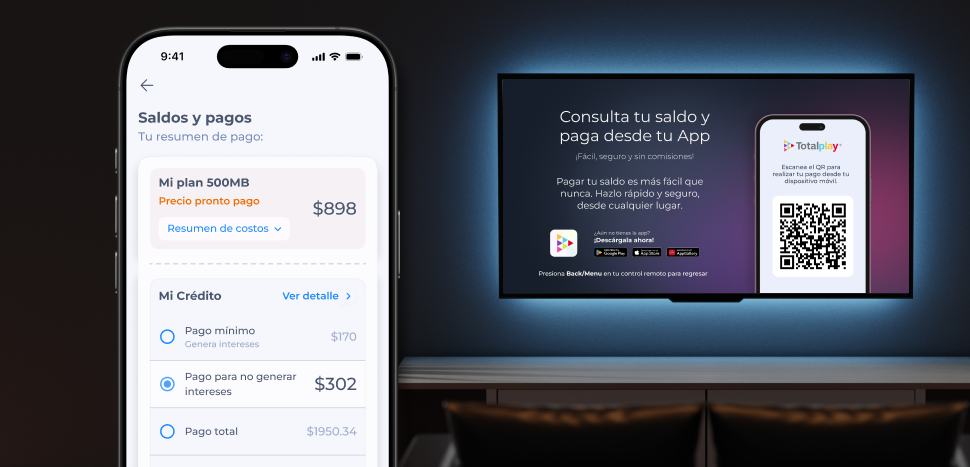
Simplifying payments

Context

By 2024, payments had become one of the biggest sources of churn risk. Customers had to manage two different due dates and flows, making Oxxo more convenient than the app itself.

Problem

Call center tickets told the story: customers often called asking for extensions, because they thought they were up to date after paying Telco, only to realize they’d missed Credit.

Interviews confirmed the insight: users didn’t want to track four different dates, and many preferred to pay offline in Oxxo, even though that cost the company commission. The app wasn’t seen as a trusted, convenient channel for payments—it was a hassle.

Hypothesis & Objectives

We believed that unifying the payment experience and aligning due dates could reduce confusion and drive more users to pay through the app.

  • Success metrics: +15% increase in in-app payments, –50% reduction in billing-related calls.
  • Constraints: heavy pushback from Telco and Credit teams, worried about financial implications and regulatory risk.

Design Process & Validation
Simplifying payments
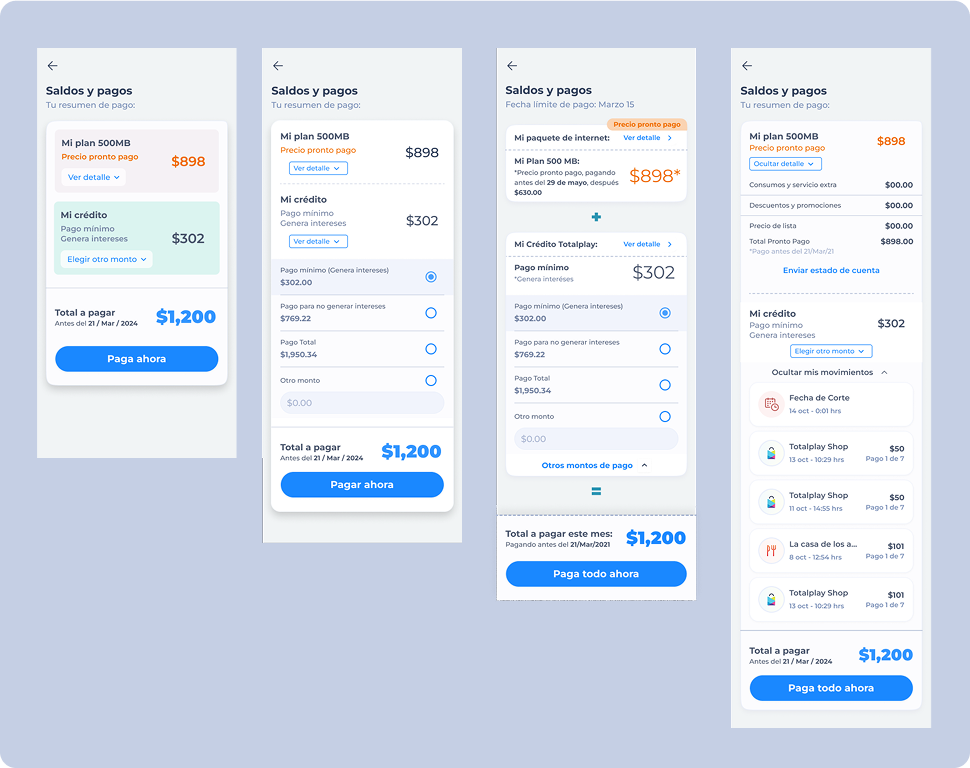
  • Research: interviews with customers, analytics on call center tickets, and benchmarks against telcos and banks.
  • Alternatives explored: reminders for each product, automated IBR calls, or auto-pay only. None addressed the core issue: two fragmented experiences.
  • Validation: usability testing with 500 users through surveys and in-depth interviews.

One of the hardest negotiations was with the Credit and Telco business units. Both resisted unifying payments, preferring to keep their own cycles. I defended the need for a single-entry point, while still respecting existing customers who had auto-pay or preferred separate payments.

Solution
Simplifying payments

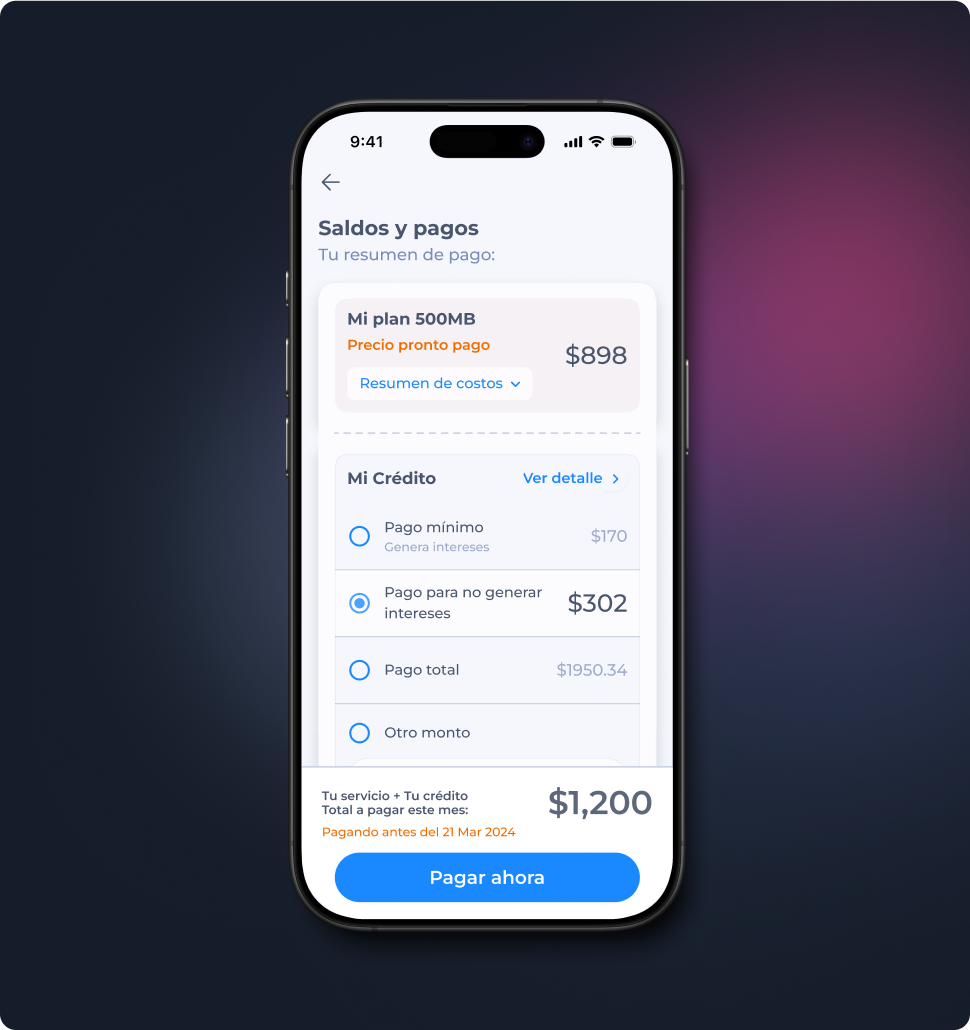
The turning point was reframing payments not as two products to be billed, but as one relationship to be maintained.

We designed a single “ticket-style” payment screen showing both Telco and Credit balances side by side:

  • Users could pay both in one click or choose to split payments if needed.
  • Auto-pay Telco customers would always see a $0 balance for that service.
  • Flexibility remained for partial payments by navigating into each service.

Priorities: simplicity, speed, and clarity.De-prioritized: redundant fields, duplicate flows, and upsells during the payment process.

The change was communicated via email and monthly statements, setting the expectation clearly.

Impact

  • +30% increase in in-app payments.
  • –50% reduction in billing-related call center traffic.
  • –40% delinquency rate on credit accounts.

The biggest shift? Oxxo was no longer easier. The app finally became the fastest, most reliable way to pay.

“It’s a natural fix that aligns with my day to day.”

Simplifying payments

Miriam, 28 years old

Interviewed user

Legacy

This shift set the stage for a unified digital wallet, moving Totalplay closer to becoming a comprehensive financial services hub.

This initiative opened the door to:

    • Persistent in-app reminders.
    • A unified wallet under development, centralizing all financial interactions.

Culturally, the project left a clear lesson: design must always start from the user’s job to be done—not from organizational silos or business structures.

Unifying Telco & Credit bills

Simplifying Payments

Design & Experience Strategy Lead (2024)

Simplifying payments

Context

By 2024, payments had become one of the biggest sources of churn risk. Customers had to manage two different due dates and flows, making Oxxo more convenient than the app itself.

Problem

Call center tickets told the story: customers often called asking for extensions, because they thought they were up to date after paying Telco, only to realize they’d missed Credit.

Interviews confirmed the insight: users didn’t want to track four different dates, and many preferred to pay offline in Oxxo, even though that cost the company commission. The app wasn’t seen as a trusted, convenient channel for payments—it was a hassle.

Hypothesis & Objectives

We believed that unifying the payment experience and aligning due dates could reduce confusion and drive more users to pay through the app.

  • Success metrics: +15% increase in in-app payments, –50% reduction in billing-related calls.
  • Constraints: heavy pushback from Telco and Credit teams, worried about financial implications and regulatory risk.

Design Process & Validation

Simplifying payments
  • Research: interviews with customers, analytics on call center tickets, and benchmarks against telcos and banks.
  • Alternatives explored: reminders for each product, automated IBR calls, or auto-pay only. None addressed the core issue: two fragmented experiences.
  • Validation: usability testing with 500 users through surveys and in-depth interviews.

One of the hardest negotiations was with the Credit and Telco business units. Both resisted unifying payments, preferring to keep their own cycles. I defended the need for a single-entry point, while still respecting existing customers who had auto-pay or preferred separate payments.

Solution

Simplifying payments

The turning point was reframing payments not as two products to be billed, but as one relationship to be maintained.

We designed a single “ticket-style” payment screen showing both Telco and Credit balances side by side:

  • Users could pay both in one click or choose to split payments if needed.
  • Auto-pay Telco customers would always see a $0 balance for that service.
  • Flexibility remained for partial payments by navigating into each service.

Priorities: simplicity, speed, and clarity.De-prioritized: redundant fields, duplicate flows, and upsells during the payment process.

The change was communicated via email and monthly statements, setting the expectation clearly.

Impact

  • +30% increase in in-app payments.
  • –50% reduction in billing-related call center traffic.
  • –40% delinquency rate on credit accounts.

The biggest shift? Oxxo was no longer easier. The app finally became the fastest, most reliable way to pay.

“It’s a natural fix that aligns with my day to day.”

Simplifying payments

Miriam, 28 years old

Interviewed user

Legacy

This shift set the stage for a unified digital wallet, moving Totalplay closer to becoming a comprehensive financial services hub.

This initiative opened the door to:

    • Persistent in-app reminders.
    • A unified wallet under development, centralizing all financial interactions.

Culturally, the project left a clear lesson: design must always start from the user’s job to be done—not from organizational silos or business structures.