Restoring Balance Between Service & Sales

Mobile App Home

Design & Experience Strategy Lead (2025)

Mobile Home App

Context

After two years of heavy focus on Marketplace, Totalplay’s app had drifted away from its original purpose: being the gateway to entertainment and core telco services.

User interviews revealed rising frustration:

  • “Every time I open the app, I only see products—what I want is to pay my bill or watch TV.”

Analytics confirmed the problem: stagnation in TV subscriptions, growing downgrades to internet-only plans, and negative app store ratings. The Home screen was dominated by sales banners, leaving users’ primary jobs underserved: paying bills, solving issues, and enjoying content.

The risk was clear: eroding Totalplay’s identity as an entertainment-first brand, increased churn, and growing dissatisfaction with the app. Leadership recognized the urgency, and I took ownership of leading a redesign to restore trust and relevance.

Problem

The Home had become a sales shelf.

  • Marketplace products took priority over telco essentials.
  • Customer perception shifted: the app was seen as invasive, not supportive.

From research, we reframed the real problem: “The app is not helping users accomplish their core jobs-to-be-done. Without that, every upsell feels like noise.”

Solution

Mobile Home App

We explored four alternatives:

  1. Make the app 100% entertainment-first.
  2. Push Marketplace further down the scroll.
  3. Create two separate apps (Marketplace vs. Telco).
  4. Hybrid model balancing entertainment + sales.

Evidence showed the hybrid model would maximize relevance: 70% Telco/Entertainment, 30% Marketplace with smarter placements.

This wasn’t just a design challenge—it was a leadership challenge. Marketplace stakeholders resisted reduced visibility, fearing loss of sales. I led negotiations by reframing the problem: instead of raw exposure, we would deliver higher conversion through relevance. By offering them tools to feed products more intelligently, we built alignment and avoided silos.

Execution

Delivering the new Home meant balancing:

    • Design clarity → simplified navigation, live content upfront, direct access to billing and support.
    • Technical feasibility → restructuring the feed logic to support new priorities.
    • Stakeholder alignment → resolving tension between entertainment and Marketplace teams. This alignment was the true design work—pixels came after.

Validation steps included:

    • User testing with interviews and usability sessions.
    • A/B testing on Home variations.
    • Pilot launch in select segments to measure engagement.

Impact

The redesigned Home changed both usage patterns and perception:

  • +25% increase in active sessions
  • +40% increase in hours of TV content viewed
  • –1.2% churn reduction
  • Marketplace sales remained stable, proving that less intrusive placement could still drive business

For users, the app was no longer “just a sales channel.” It became a place to manage their service and enjoy entertainment.

For the business, we restored the app’s role as a digital companion instead of a distraction.

Learnings

This initiative confirmed that:

  • Leadership is about alignment, not control.
  • Respecting core jobs drives loyalty and opens doors to upselling.
  • Design can reframe culture: from exposure to relevance.

Restoring Balance Between Service & Sales

Mobile App Home

Design & Experience Strategy Lead (2025)
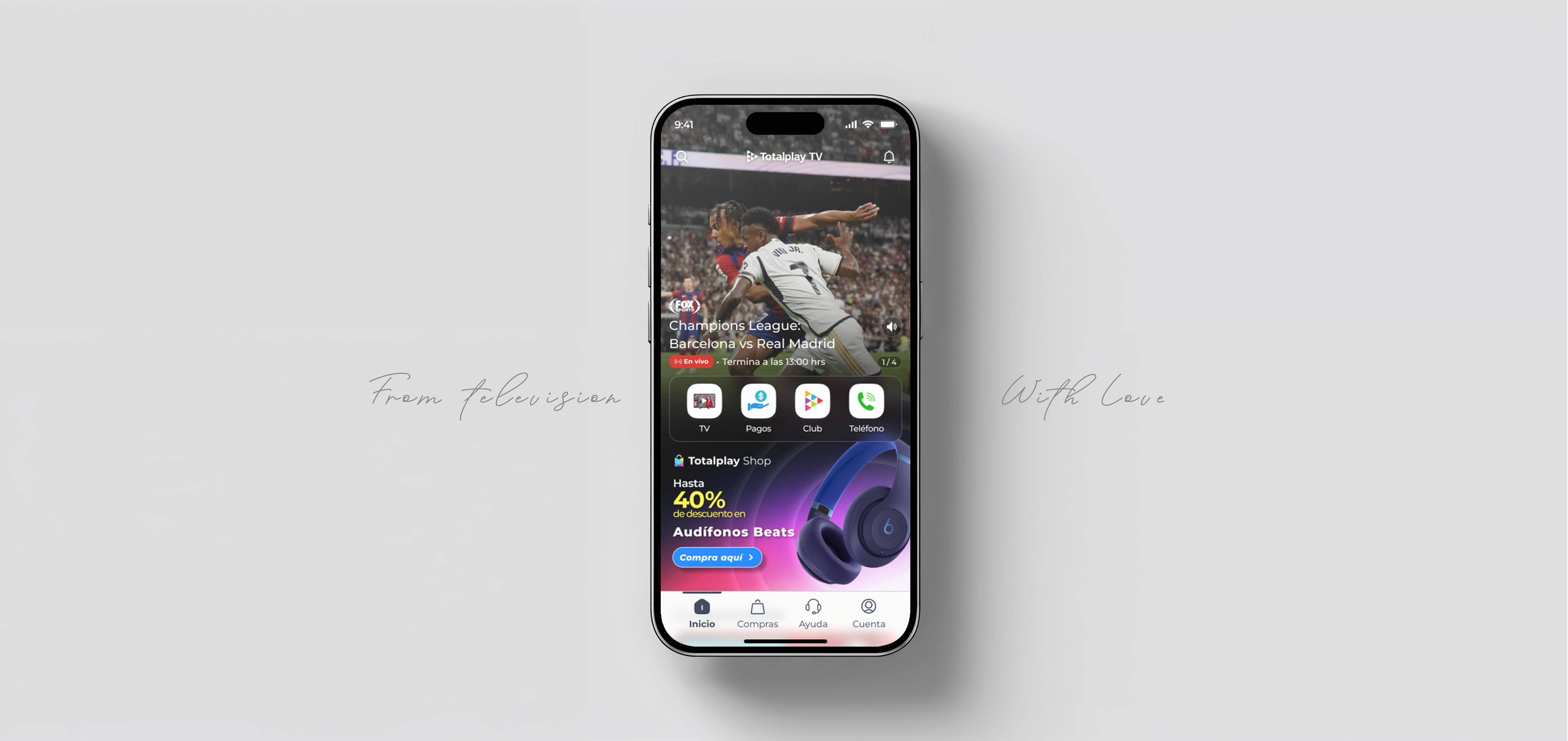
Mobile Home App

Context

After two years of heavy focus on Marketplace, Totalplay’s app had drifted away from its original purpose: being the gateway to entertainment and core telco services.

User interviews revealed rising frustration:

  • “Every time I open the app, I only see products—what I want is to pay my bill or watch TV.”

Analytics confirmed the problem: stagnation in TV subscriptions, growing downgrades to internet-only plans, and negative app store ratings. The Home screen was dominated by sales banners, leaving users’ primary jobs underserved: paying bills, solving issues, and enjoying content.

The risk was clear: eroding Totalplay’s identity as an entertainment-first brand, increased churn, and growing dissatisfaction with the app. Leadership recognized the urgency, and I took ownership of leading a redesign to restore trust and relevance.

Problem

The Home had become a sales shelf.

  • Marketplace products took priority over telco essentials.
  • Customer perception shifted: the app was seen as invasive, not supportive.

From research, we reframed the real problem: “The app is not helping users accomplish their core jobs-to-be-done. Without that, every upsell feels like noise.”

Solution
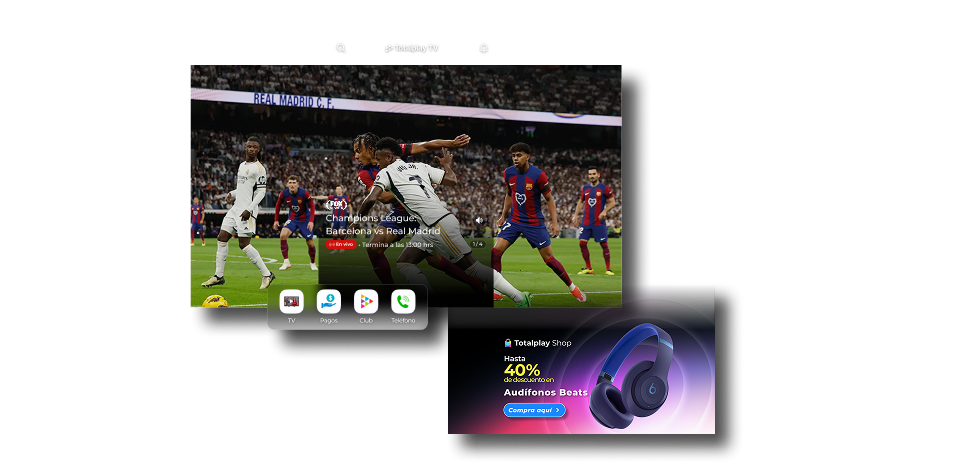
Mobile Home App

We explored four alternatives:

  1. Make the app 100% entertainment-first.
  2. Push Marketplace further down the scroll.
  3. Create two separate apps (Marketplace vs. Telco).
  4. Hybrid model balancing entertainment + sales.

Evidence showed the hybrid model would maximize relevance: 70% Telco/Entertainment, 30% Marketplace with smarter placements.

This wasn’t just a design challenge—it was a leadership challenge. Marketplace stakeholders resisted reduced visibility, fearing loss of sales. I led negotiations by reframing the problem: instead of raw exposure, we would deliver higher conversion through relevance. By offering them tools to feed products more intelligently, we built alignment and avoided silos.

Execution

Delivering the new Home meant balancing:

    • Design clarity → simplified navigation, live content upfront, direct access to billing and support.
    • Technical feasibility → restructuring the feed logic to support new priorities.
    • Stakeholder alignment → resolving tension between entertainment and Marketplace teams. This alignment was the true design work—pixels came after.

Validation steps included:

    • User testing with interviews and usability sessions.
    • A/B testing on Home variations.
    • Pilot launch in select segments to measure engagement.

Impact

The redesigned Home changed both usage patterns and perception:

  • +25% increase in active sessions
  • +40% increase in hours of TV content viewed
  • –1.2% churn reduction
  • Marketplace sales remained stable, proving that less intrusive placement could still drive business

For users, the app was no longer “just a sales channel.” It became a place to manage their service and enjoy entertainment.

For the business, we restored the app’s role as a digital companion instead of a distraction.

Learnings

This initiative confirmed that:

  • Leadership is about alignment, not control.
  • Respecting core jobs drives loyalty and opens doors to upselling.
  • Design can reframe culture: from exposure to relevance.

Restoring Balance Between Service & Sales

Mobile App Home

Design & Experience Strategy Lead (2025)

Mobile Home App

Context

After two years of heavy focus on Marketplace, Totalplay’s app had drifted away from its original purpose: being the gateway to entertainment and core telco services.

User interviews revealed rising frustration:

  • “Every time I open the app, I only see products—what I want is to pay my bill or watch TV.”

Analytics confirmed the problem: stagnation in TV subscriptions, growing downgrades to internet-only plans, and negative app store ratings. The Home screen was dominated by sales banners, leaving users’ primary jobs underserved: paying bills, solving issues, and enjoying content.

The risk was clear: eroding Totalplay’s identity as an entertainment-first brand, increased churn, and growing dissatisfaction with the app. Leadership recognized the urgency, and I took ownership of leading a redesign to restore trust and relevance.

Problem

The Home had become a sales shelf.

  • Marketplace products took priority over telco essentials.
  • Customer perception shifted: the app was seen as invasive, not supportive.

From research, we reframed the real problem: “The app is not helping users accomplish their core jobs-to-be-done. Without that, every upsell feels like noise.”

Solution

Mobile Home App

We explored four alternatives:

  1. Make the app 100% entertainment-first.
  2. Push Marketplace further down the scroll.
  3. Create two separate apps (Marketplace vs. Telco).
  4. Hybrid model balancing entertainment + sales.

Evidence showed the hybrid model would maximize relevance: 70% Telco/Entertainment, 30% Marketplace with smarter placements.

This wasn’t just a design challenge—it was a leadership challenge. Marketplace stakeholders resisted reduced visibility, fearing loss of sales. I led negotiations by reframing the problem: instead of raw exposure, we would deliver higher conversion through relevance. By offering them tools to feed products more intelligently, we built alignment and avoided silos.

Execution

Delivering the new Home meant balancing:

    • Design clarity → simplified navigation, live content upfront, direct access to billing and support.
    • Technical feasibility → restructuring the feed logic to support new priorities.
    • Stakeholder alignment → resolving tension between entertainment and Marketplace teams. This alignment was the true design work—pixels came after.

Validation steps included:

    • User testing with interviews and usability sessions.
    • A/B testing on Home variations.
    • Pilot launch in select segments to measure engagement.

Impact

The redesigned Home changed both usage patterns and perception:

  • +25% increase in active sessions
  • +40% increase in hours of TV content viewed
  • –1.2% churn reduction
  • Marketplace sales remained stable, proving that less intrusive placement could still drive business

For users, the app was no longer “just a sales channel.” It became a place to manage their service and enjoy entertainment.

For the business, we restored the app’s role as a digital companion instead of a distraction.

Learnings

This initiative confirmed that:

  • Leadership is about alignment, not control.
  • Respecting core jobs drives loyalty and opens doors to upselling.
  • Design can reframe culture: from exposure to relevance.