Leading a Cultural Shift to Stop Fraud

Digital Adoption

Design & Experience Strategy Lead (2022)

Digital Adoption

Challenge

Acquisitions were up. Cancellations matched them one-to-one. Fraud from outsourced sales had made growth unsustainable.

The mandate was urgent and ambitious:

“Within 30 days, we need a secure, internal onboarding system that ensures every contract is traceable—and we cannot lose our customers in the process.”

This was not just a UX challenge. It was a cultural transformation, shifting from analog outsourcing to a digital-first, trust-driven model.

Solution

Digital Adoption
  • As UX Manager, my role wasn’t to design screens—it was to align conflicting forces under extreme pressure:
  • Leadership, pushing for full mandatory biometrics.
  • Engineering, advocating for multiple additional steps.
  • Users, resistant after years of frictionless, paper-based service.
  • I reframed the debate: the question wasn’t “how much data can we demand?” but “how much trust can we earn?”
  • Through workshops, daily decision forums, and usability tests, I guided the team to a hybrid strategy:
  • New customers → Full verification from day one (INE + live proof).
  • Existing customers → Progressive verification: phone, email, and password as mandatory; biometrics introduced as optional, framed as enhanced security rather than obligation.
  • This approach balanced fraud prevention with customer respect. It also shifted the company mindset: onboarding was no longer about paperwork—it was about building a trusted digital relationship.

Execution

Digital Adoption

Delivering in 30 days required more than sprint planning—it demanded orchestration across silos. I facilitated collaboration between legal, engineering, and operations, cutting through bureaucracy without losing compliance.

Key leadership decisions

  • Lean onboarding: removed attempts to overload the flow with upsells, addresses, and surveys.
  • Strategic framing: reframed verification as customer protection, not corporate control.
  • Respect for loyalty: refused to force 5M+ existing customers into re-verification overnight.

By turning conflict into collaboration and anchoring every discussion in long-term trust, I kept the team focused on impact over urgency.

UX decisions Guided by one principle—reduce fraud while keeping friction proportional to user context—we:

  • Replaced legacy account-number logins with phone OTP as the new entry point.
  • Added email for account statements and recovery.
  • Introduced device biometrics for secure and fast access.
  • Simplified the vendor platform’s face recognition and INE scan steps to reduce friction.
  • Placed biometric steps at logical, lower-friction moments: mandatory for new customers at service activation, optional for existing customers at payment flow with a security rationale.

Pilots & validation

  • Usability tests with 8 participants forecasted potential drop-off.
  • 10,000-user “friends & family” pilot validated adoption among existing users.
  • 7-day pilot in Iztapalapa confirmed new users perceived verification as standard and non-intrusive.

Despite stakeholder pressure, every feature launched on time. The only element staged progressively was user adoption itself.

“This flow feels standard for these kinds of contracts. I was surprised it wasn’t there before, and doing everything on paper didn’t give me much confidence.”

Digital Adoption

Ricardo, 33 years old

Interviewed user

Impact

  • Verified 4.75M users (phone + email) and 2.8M biometrics (INE + live proof).
  • Achieved a 95% reduction in fraud from contractor-led sales.
  • Increased app downloads by 25%, cementing it as the primary digital channel.
  • Completion rates: 70% within 3 months, reaching 95% by Q2.

But the real impact went beyond metrics:

  • For the first time in 12 years, the company owned its contracting process end-to-end.
  • Design led the way in replacing a broken sales culture with a digital-first, trust-based one.
  • This identity layer became the foundation for new revenue streams, from credit to digital marketplace services.
  • Design leadership replaced a broken sales culture with a digital-first, trust-based one.

Learnings

This initiative proved that design leadership is about orchestration, not just execution. By reframing the problem from fraud to trust, I turned a 30-day crisis into a lasting transformation.

Key learnings:

  • Aligning stakeholders is less about consensus and more about reframing priorities around trust.
  • Respecting existing customers builds deeper loyalty than enforcing compliance.
  • Design can lead culture change when framed not as control, but as empowerment.

Legacy

While fraud prevention was the driver, the new identity layer unlocked broader opportunities:

  • Credit services for over 1M users.
  • Household-level marketplace segmentation.
  • Progressive Digital Identity, opening the app to anyone—not just telco subscribers—fueling exponential growth and new revenue streams.

What began as a fraud-prevention initiative became the backbone for Totalplay’s evolution into a multi-service digital ecosystem.

Leading a Cultural Shift to Stop Fraud

Digital Adoption

Design & Experience Strategy Lead (2022)

Digital Adoption

Challenge

Acquisitions were up. Cancellations matched them one-to-one. Fraud from outsourced sales had made growth unsustainable.

The mandate was urgent and ambitious:

“Within 30 days, we need a secure, internal onboarding system that ensures every contract is traceable—and we cannot lose our customers in the process.”

This was not just a UX challenge. It was a cultural transformation, shifting from analog outsourcing to a digital-first, trust-driven model.

Solution
Digital Adoption
  • As UX Manager, my role wasn’t to design screens—it was to align conflicting forces under extreme pressure:
  • Leadership, pushing for full mandatory biometrics.
  • Engineering, advocating for multiple additional steps.
  • Users, resistant after years of frictionless, paper-based service.
  • I reframed the debate: the question wasn’t “how much data can we demand?” but “how much trust can we earn?”
  • Through workshops, daily decision forums, and usability tests, I guided the team to a hybrid strategy:
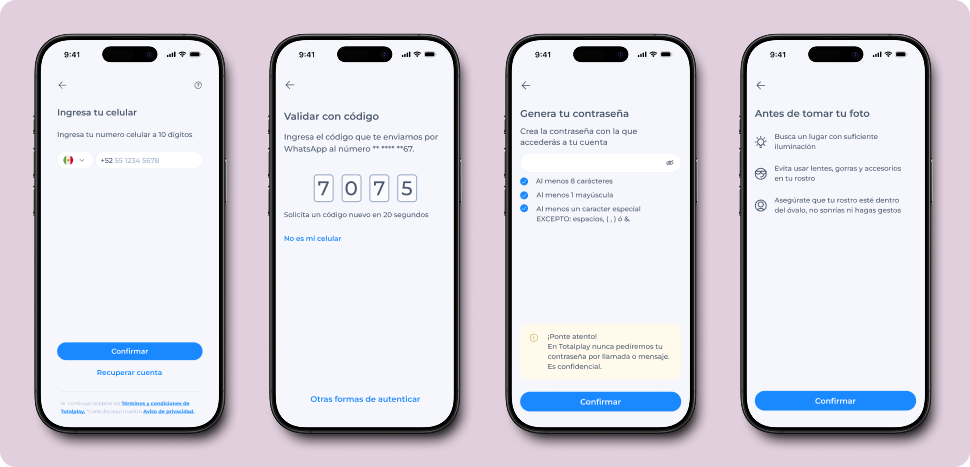
  • New customers → Full verification from day one (INE + live proof).
  • Existing customers → Progressive verification: phone, email, and password as mandatory; biometrics introduced as optional, framed as enhanced security rather than obligation.
  • This approach balanced fraud prevention with customer respect. It also shifted the company mindset: onboarding was no longer about paperwork—it was about building a trusted digital relationship.

Execution
Digital Adoption

Delivering in 30 days required more than sprint planning—it demanded orchestration across silos. I facilitated collaboration between legal, engineering, and operations, cutting through bureaucracy without losing compliance.

Key leadership decisions

  • Lean onboarding: removed attempts to overload the flow with upsells, addresses, and surveys.
  • Strategic framing: reframed verification as customer protection, not corporate control.
  • Respect for loyalty: refused to force 5M+ existing customers into re-verification overnight.

By turning conflict into collaboration and anchoring every discussion in long-term trust, I kept the team focused on impact over urgency.

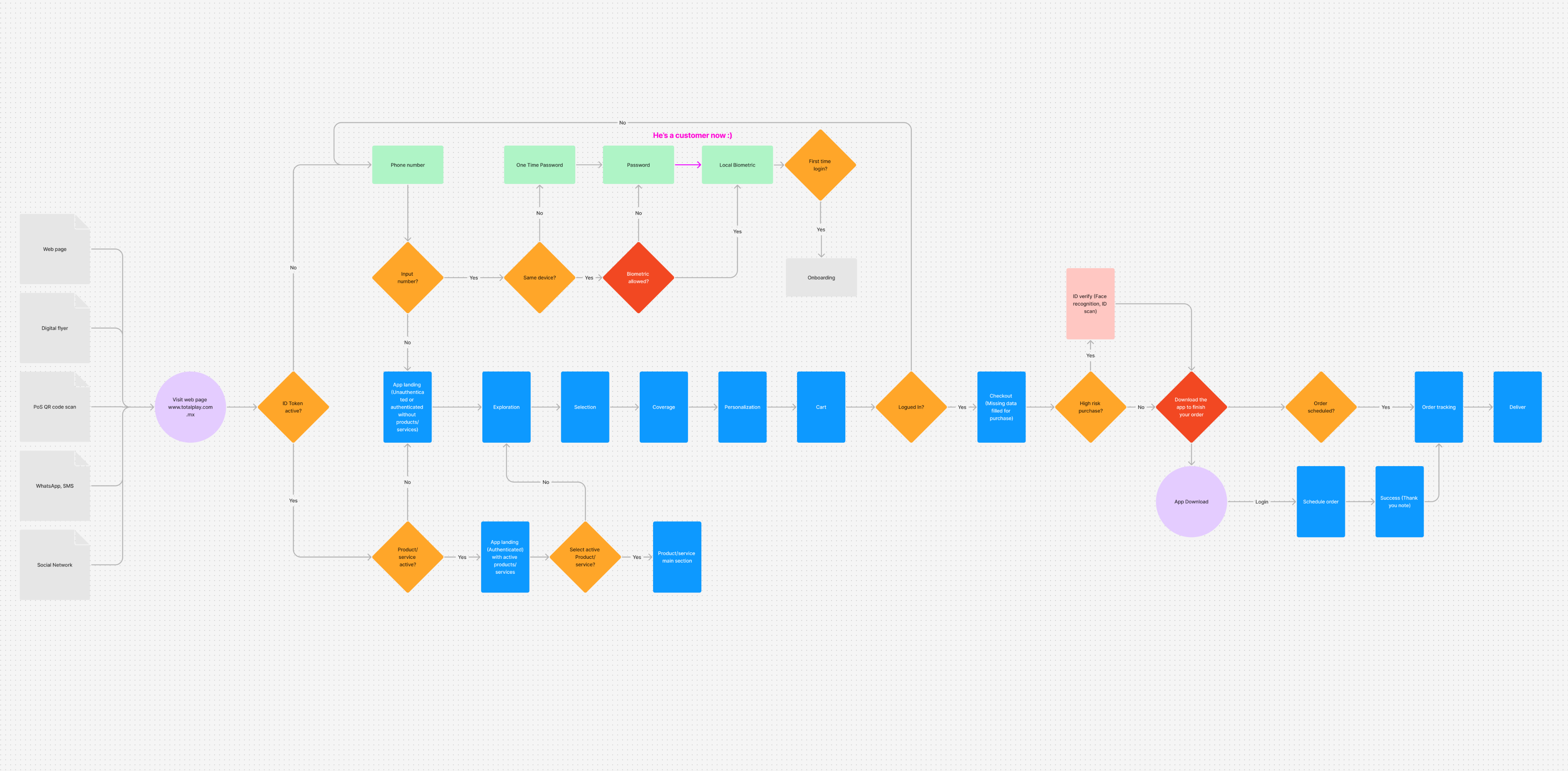
UX decisions Guided by one principle—reduce fraud while keeping friction proportional to user context—we:

  • Replaced legacy account-number logins with phone OTP as the new entry point.
  • Added email for account statements and recovery.
  • Introduced device biometrics for secure and fast access.
  • Simplified the vendor platform’s face recognition and INE scan steps to reduce friction.
  • Placed biometric steps at logical, lower-friction moments: mandatory for new customers at service activation, optional for existing customers at payment flow with a security rationale.

Pilots & validation

  • Usability tests with 8 participants forecasted potential drop-off.
  • 10,000-user “friends & family” pilot validated adoption among existing users.
  • 7-day pilot in Iztapalapa confirmed new users perceived verification as standard and non-intrusive.

Despite stakeholder pressure, every feature launched on time. The only element staged progressively was user adoption itself.

“This flow feels standard for these kinds of contracts. I was surprised it wasn’t there before, and doing everything on paper didn’t give me much confidence.”

Digital Adoption

Ricardo, 33 years old

Interviewed user

Impact

  • Verified 4.75M users (phone + email) and 2.8M biometrics (INE + live proof).
  • Achieved a 95% reduction in fraud from contractor-led sales.
  • Increased app downloads by 25%, cementing it as the primary digital channel.
  • Completion rates: 70% within 3 months, reaching 95% by Q2.

But the real impact went beyond metrics:

  • For the first time in 12 years, the company owned its contracting process end-to-end.
  • Design led the way in replacing a broken sales culture with a digital-first, trust-based one.
  • This identity layer became the foundation for new revenue streams, from credit to digital marketplace services.
  • Design leadership replaced a broken sales culture with a digital-first, trust-based one.

Learnings

This initiative proved that design leadership is about orchestration, not just execution. By reframing the problem from fraud to trust, I turned a 30-day crisis into a lasting transformation.

Key learnings:

  • Aligning stakeholders is less about consensus and more about reframing priorities around trust.
  • Respecting existing customers builds deeper loyalty than enforcing compliance.
  • Design can lead culture change when framed not as control, but as empowerment.

Legacy

While fraud prevention was the driver, the new identity layer unlocked broader opportunities:

  • Credit services for over 1M users.
  • Household-level marketplace segmentation.
  • Progressive Digital Identity, opening the app to anyone—not just telco subscribers—fueling exponential growth and new revenue streams.

What began as a fraud-prevention initiative became the backbone for Totalplay’s evolution into a multi-service digital ecosystem.

Leading a Cultural Shift to Stop Fraud

Digital Adoption

Design & Experience Strategy Lead (2022)

Digital Adoption

Challenge

Acquisitions were up. Cancellations matched them one-to-one. Fraud from outsourced sales had made growth unsustainable.

The mandate was urgent and ambitious:

“Within 30 days, we need a secure, internal onboarding system that ensures every contract is traceable—and we cannot lose our customers in the process.”

This was not just a UX challenge. It was a cultural transformation, shifting from analog outsourcing to a digital-first, trust-driven model.

Solution

Digital Adoption

As UX Manager, my role wasn’t to design screens—it was to align conflicting forces under extreme pressure:

  • Leadership, pushing for full mandatory biometrics.
  • Engineering, advocating for multiple additional steps.
  • Users, resistant after years of frictionless, paper-based service.

I reframed the debate: the question wasn’t “how much data can we demand?” but “how much trust can we earn?”

Through workshops, daily decision forums, and usability tests, I guided the team to a hybrid strategy:

  • New customers → Full verification from day one (INE + live proof).
  • Existing customers → Progressive verification: phone, email, and password as mandatory; biometrics introduced as optional, framed as enhanced security rather than obligation.

This approach balanced fraud prevention with customer respect. It also shifted the company mindset: onboarding was no longer about paperwork—it was about building a trusted digital relationship.

Execution

Digital Adoption

Delivering in 30 days required more than sprint planning—it demanded orchestration across silos. I facilitated collaboration between legal, engineering, and operations, cutting through bureaucracy without losing compliance.

Key leadership decisions

  • Lean onboarding: removed attempts to overload the flow with upsells, addresses, and surveys.
  • Strategic framing: reframed verification as customer protection, not corporate control.
  • Respect for loyalty: refused to force 5M+ existing customers into re-verification overnight.

By turning conflict into collaboration and anchoring every discussion in long-term trust, I kept the team focused on impact over urgency.

UX decisions Guided by one principle—reduce fraud while keeping friction proportional to user context—we:

  • Replaced legacy account-number logins with phone OTP as the new entry point.
  • Added email for account statements and recovery.
  • Introduced device biometrics for secure and fast access.
  • Simplified the vendor platform’s face recognition and INE scan steps to reduce friction.
  • Placed biometric steps at logical, lower-friction moments: mandatory for new customers at service activation, optional for existing customers at payment flow with a security rationale.

Pilots & validation

  • Usability tests with 8 participants forecasted potential drop-off.
  • 10,000-user “friends & family” pilot validated adoption among existing users.
  • 7-day pilot in Iztapalapa confirmed new users perceived verification as standard and non-intrusive.

Despite stakeholder pressure, every feature launched on time. The only element staged progressively was user adoption itself.

“This flow feels standard for these kinds of contracts. I was surprised it wasn’t there before, and doing everything on paper didn’t give me much confidence.”

Digital Adoption

Ricardo, 33 years old

Interviewed user

Impact

  • Verified 4.75M users (phone + email) and 2.8M biometrics (INE + live proof).
  • Achieved a 95% reduction in fraud from contractor-led sales.
  • Increased app downloads by 25%, cementing it as the primary digital channel.
  • Completion rates: 70% within 3 months, reaching 95% by Q2.

But the real impact went beyond metrics:

  • For the first time in 12 years, the company owned its contracting process end-to-end.
  • Design led the way in replacing a broken sales culture with a digital-first, trust-based one.
  • This identity layer became the foundation for new revenue streams, from credit to digital marketplace services.
  • Design leadership replaced a broken sales culture with a digital-first, trust-based one.

Learnings

This initiative proved that design leadership is about orchestration, not just execution. By reframing the problem from fraud to trust, I turned a 30-day crisis into a lasting transformation.

Key learnings:

  • Aligning stakeholders is less about consensus and more about reframing priorities around trust.
  • Respecting existing customers builds deeper loyalty than enforcing compliance.
  • Design can lead culture change when framed not as control, but as empowerment.

Legacy

While fraud prevention was the driver, the new identity layer unlocked broader opportunities:

  • Credit services for over 1M users.
  • Household-level marketplace segmentation.
  • Progressive Digital Identity, opening the app to anyone—not just telco subscribers—fueling exponential growth and new revenue streams.

What began as a fraud-prevention initiative became the backbone for Totalplay’s evolution into a multi-service digital ecosystem.